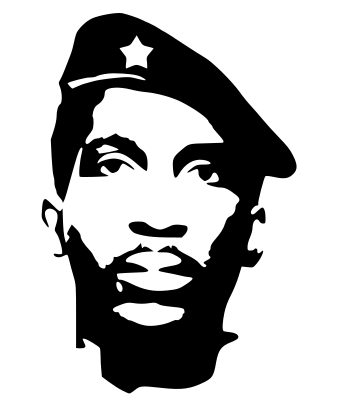
A historical note
Comrade President Thomas Sankara
National hero of Burkina Faso, president of the Conseil National de la Révolution from 1983 to 1987. This note is deliberately short and factual: it places the man to whom the monument is dedicated, without claiming to be a history.
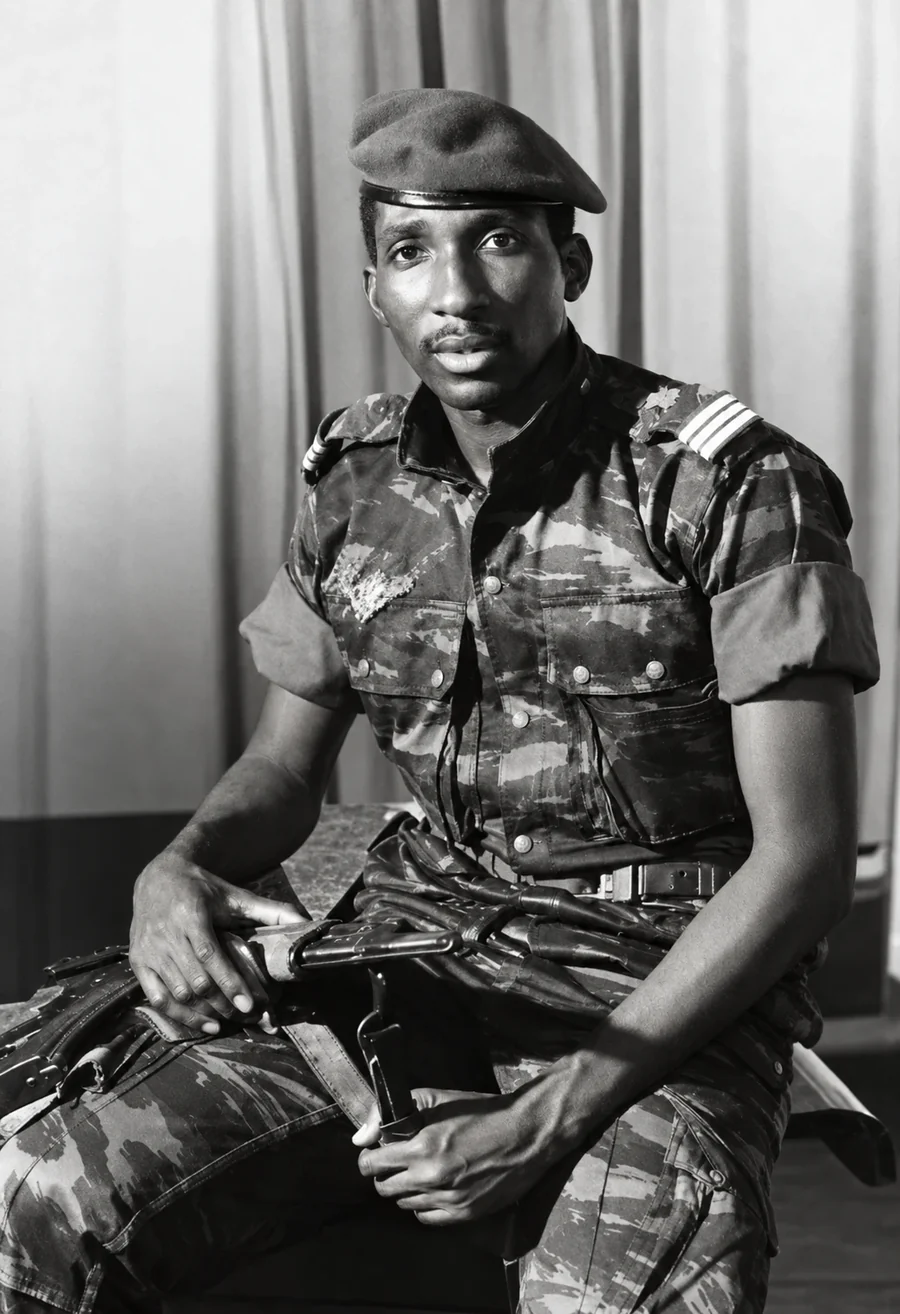
Landmarks
| 21 December 1949 | Born at Yako, in Upper Volta. |
|---|---|
| 4 August 1983 | The Democratic and Popular Revolution opens. He becomes president of the Conseil National de la Révolution. |
| 4 August 1984 | Upper Volta takes the name Burkina Faso, “the homeland of upright people”. The country gives itself a new flag and a new anthem, the Ditanyè. |
| 4 October 1984 | Address to the General Assembly of the United Nations, in New York. |
| 29 July 1987 | Address on African debt at the summit of the Organisation of African Unity, in Addis Ababa. |
| 15 October 1987 | He is assassinated in Ouagadougou, with twelve of his companions. |
The Democratic and Popular Revolution
From 1983 to 1987, the Democratic and Popular Revolution set the country on a transformation across the board: vaccination and public health campaigns, literacy campaigns, reforestation and the fight against the advance of the desert, land reform, a railway built by popular mobilisation.
The emancipation of women was set down as a condition of the Revolution, not as a side question: women entered the government, and national campaigns were led against forced marriage and against mutilation.
In economic matters the watchword was self-sufficiency: let us produce and consume Burkinabè. Those holding public office were held to an austerity that applied first at the head of the State.
Internationally, Comrade President Thomas Sankara carried the question of the debt of African countries, which he named before his peers as the mechanism by which political independence is left without effect.
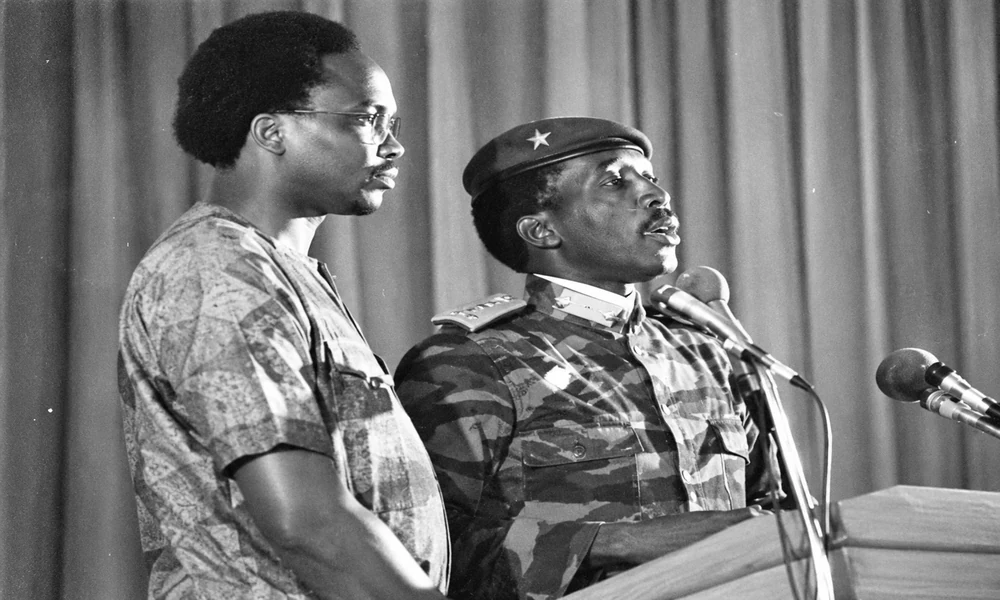
His words
Five passages. The first four are taken from identified speeches and carry their place and date. The last is the sentence everyone knows: it has come down without a speech or a date, and it stands here because the Thomas Sankara Memorial uses it.
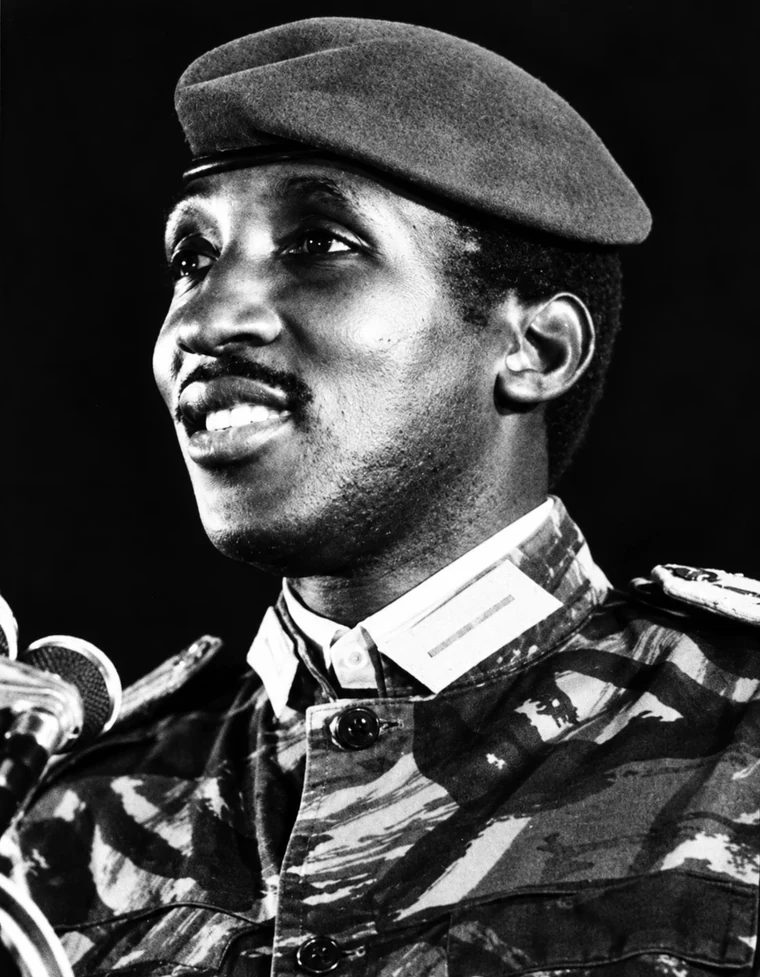
I speak not only in the name of the Burkina Faso I love so much, but also in the name of all those who are in pain somewhere.
There is no true social revolution until women are set free. May my eyes never see, and may my steps never carry me into, a society where half the people are kept in silence.
The debt cannot be repaid, because if we do not pay, our creditors will not die. Let us be sure of that. If, on the other hand, we pay, it is we who are going to die.
To dare to invent the future.
You can kill a man, but you cannot kill his ideas.
It is the sentence people know without always knowing where it comes from, and it is the one the monument says in its own way. A man was shot down on 15 October 1987. Thirty-nine years later his face is cut through six millimetres of steel, north of Rome, and he is still looking. L'éternel veilleur, the eternal watchman: the title of the work says nothing else.
The Addis Ababa speech of 29 July 1987 was the last the Comrade President gave before his African peers. The 1985 interview gave its title to the collection of his speeches, Oser inventer l'avenir. Translated from the French.
The restoration of memory
The memory of Comrade President Thomas Sankara is today the object of a national movement led by the authorities of Burkina Faso, at the impulse of Comrade President Ibrahim Traoré: the rehabilitation of the President, the building of the Thomas Sankara Memorial, the unveiling of the Mausoleum where he rests with his twelve companions.
The monument raised at the Parco Thomas Sankara in Rome belongs to that movement, in its own place and on its own scale: that of a Burkinabè artistic contribution carried abroad.